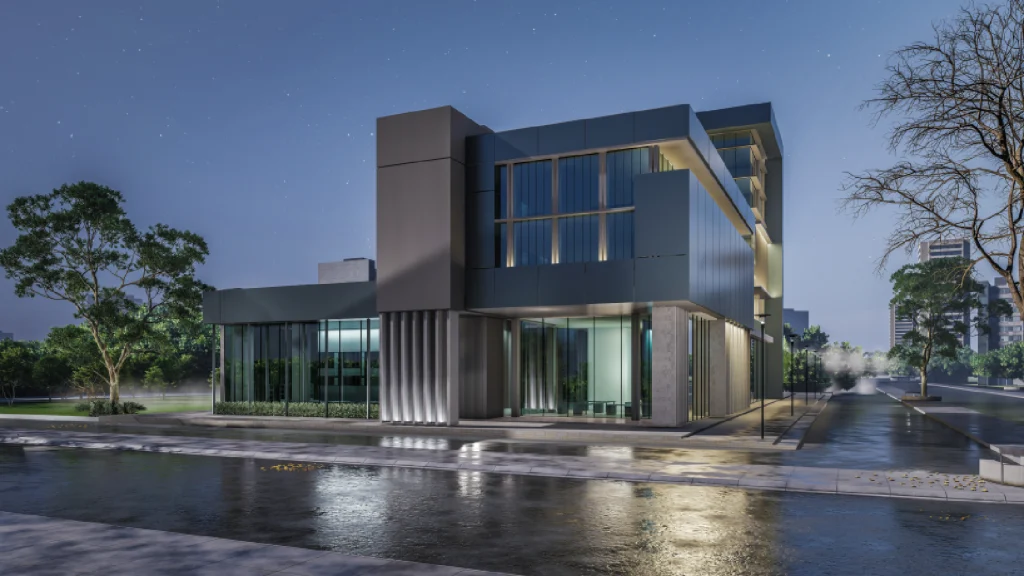
What You Need to Know About How to Build a House
Today let’s talk building a house! Houses come in all varieties to fit various needs. The whole process can take months or years to complete depending on several factors.
Over the past couple of days, we have researched the best ways you can use to build your dream house with ease. Further, we have the go-ahead to list every requirement you need to avoid costly mistakes when building a house.
When you meditate on building a home, it is very tempting to start designing your dream house, however, there are some essential steps you need to take prior. Even before you settle on a builder, ensure you have a precise idea of the cost of building a house, what you will need, and the entire process.
In this blog, you will get more knowledge on several things associated with building a house.

Some of the things we will discuss include;
- Steps to build a house
- How must does it costs to build a house
- How to build a house cheaply
- Buy or build a house?
Steps to Build a House
The steps of building a house are also known as the stages of building a house. Further, it is also commonly known as the procedure of building a house. This involves the entire process of building a house from start to finish.
Have you been wondering where to start when building a house? Well, we will provide you with a step-by-step guide on this entire process.
Find an ideal land
Your first and foremost step is to get an ideal land to build your house. If you already have the land in place, well and good. But if not yet, you need to find an ideal land where you can build.
You can find good land by searching the land for sale online or speaking to a land selling company with land in the area you wish to build your house.
Land purchase is a process and you can find a guide on steps on how to buy land to help that will help you out. This will ensure that you get your title deed and be ready to build your house.
Planning stage
How do you normally start house planning? Well, the first step is to determine the type of house you wish to build. Is it residential, commercial, etc.? How many floors will the house have, which technology would you like to use, and so on?
After this, you will need to get an architect to develop a plan for you. An architect is a professional with skills in planning and designing buildings. There are various types of architects that you.
There are various types of architects which include design, technical, project manager and interior designer, landscape architects among others.
In addition, architects charge a minimum of 6% of the total construction costs. You can check our subsequent blogs on tips to select the right architect.
Once the architect develops a plan the submit it to the local government for approvals and also apply for building permits. A building permit is an official document permitting to build on a particular land or make some changes to a building.
Building permits either commercial or residential are given by local government building inspectors. The cost of a building permit depends on the type of building. You can check our subsequent blogs on how to obtain a building permit.
Your plans should include;
- Floor plan
- Site plan
- Roof plan
- Exterior elevation
- Landscape plan
- Interior elevation plan among others.
Your architect is the most ideal person to share this with you. At times, people ask whether they can design their own house without an architect and whether they can get free house plans.
Well, we would advise that you work with a professional architect to avoid making mistakes.
Lastly from your plan, you will come up with your building budget from start to finish. This includes the cost of labor, materials, security for the site, etc.
Preparation of the construction site
Site preparation is the process of clearing and leveling the ground and moving building materials to the site. Some key activities were undertaken during site preparation include;
- Demolishing some old buildings
- Excavation
- Ground leveling
- Land drainage
- Site surveying
- Site clearance
- Anti-termite’s treatment
- Soil testing to ensure it is suitable for construction
When all this is done you can move to the next step
Gather your building team
Depending on the budget you are working with you can decide whether to work with a construction company or just have someone supervise. One advantage of working with a construction company is that it eases the supervision and monitoring part. You only wait for the handover process.
However, you can still be in charge of your construction, but the materials and have a Team on the ground.
Our big question is even before you decide which way to go: How do you plan to be part of the process? If you will be fully involved, you will be supervising the entire Team if partially, you can hire a general contractor to help in coordinating the work.
Your Team should involve an electrician, plumber & drainer, gasfitter, concreter, carpenter, bricklayer, waterproofer, plasterer, roofer, tiler, floor sander, painter and landscape, etc.
Building the foundation
When your building team is ready and the site is ready for construction, footings and foundations are done. At this point, you will notice that the real construction has begun ready for the house structure.
House Framing
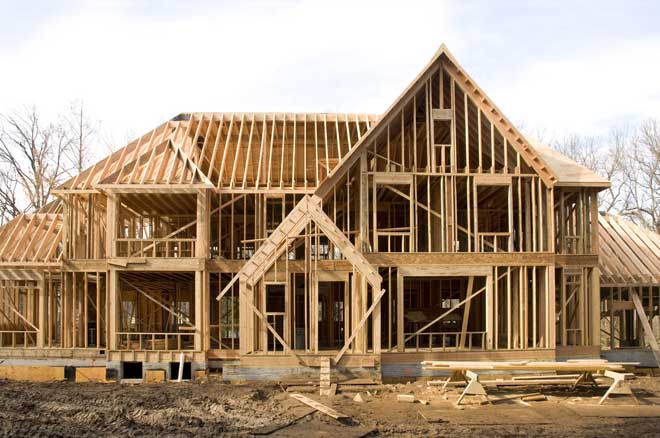
House framing consists of many separate developments that have accumulated into one. The most common framing material is wood, but metal framing is becoming popular.
Metal may be desired in some areas and maybe a code regulation in other areas as well. Over time you will see some pillars rising up around the building as the house comes up steadily.
Installation of plumbing items and electrical
This goes hand in hand with the building process from the foundation stage. The drainage, water, and electric connection need to be taken care of by a plumber and electrician consecutively. This also includes security systems if any
Installation of insulation
With the new technologies coming up each day some homes have to need to have energy efficiency and control the climate internally. As such, some people prefer having fiber glad, foam, or blanket as a form of insulation.
Drywall, flooring, and roofing
Once the drywall is complete, other exterior finishes can be installed, such as stucco or siding. Cabinets and flooring follow, as well as bathroom finishes, like sinks, tubs, and toilets. The roof is also done.
There are several roofs that one can consider having in their house. They include; flat roof, gable roof, mansard roof among others. You can check our subsequent blogs on the types of roofs you can consider having in your house.
Installation of doors and windows
Once the roofing and flooring are done, the next step is usually the installation of doors and windows to the house. This is done in accordance with the initial house plan and the frame in place.
House finishes
This includes but is not limited to painting, landscaping, and exterior aspects. At this stage, most of the work has been completed. You can now work on pathways, parking, pools, etc. The final stage is landscaping where you customize out the door to desired
House occupation certificate
Once the construction of your house is complete, you can invite your local government authorities to inspect it and issue a certificate of occupation.
At this point, you have the liberty to move into your new home, although you will still need to apply for electricity, water, and sewerage connections from the service providers in your area.
How Must Does It Costs to Build a House
I am sure by now you asking how much does it cost to build a house from start to finish. However, the costs of building a house depend on a number of factors. Below are some of the factors affecting the cost of building a house.
Location
Where are you planning to build, in an urban or rural area? Well, the prices will differ depending on this. Generally, it is cheaper to build in a rural area in comparison to an urban area.
Cost of materials
This is another major factor that will affect a huge chunk of the costs. If the materials will be ferried from a far location, the costs will be higher due to transport costs. Further, the type of materials being used will also affect the costs.
Labour cost
Labor costs vary from one area to another, therefore, the average rates in your area should be put into consideration when making calculations.
Condition of the construction site
Some construction sites require deep excavation and leveling while others are clear and ready. When a lot of work is put to clear the site the costs will be higher
Cost of managing the project
This will vary depending on who is managing the project. You need to keep it into consideration as well.
Size and type of construction
The bigger the house the higher the costs and also the duration that will be taken. A construction that uses wood or iron sheets will be cheaper compared to stones.
Inflation
Some construction will take years and months and inflation may have happened thus increasing the costs. This is a factor that someone should consider always.
Land prices
In some cases, you would wish to build but have not yet owned land. That means you will incur the cost of buying land before construction.
With this background, it means that there are no standard building costs in all areas. However, the average cost of construction is about 350 USD per square meter for a modest dwelling in major towns, while a high-end home can cost upwards of 600 USD per square meter.
How to Build a House Cheaply
Building a house can be costly or cheaper depending on how you would like it. Some homeowners have successfully built a house faster and with a very tight budget.
All you need is to have the right materials and design within your budget. Proper planning is also key when working with a low budget.
This article explains it deeper. Let’s start with tips to help you cut costs when building a home.
Keep your house small and simple
Big houses require more in terms of the workload, materials used, and maintenance cost. You can plan to build a smaller house that can still accommodate your family. You can also avoid complex designs that may be slightly expensive.
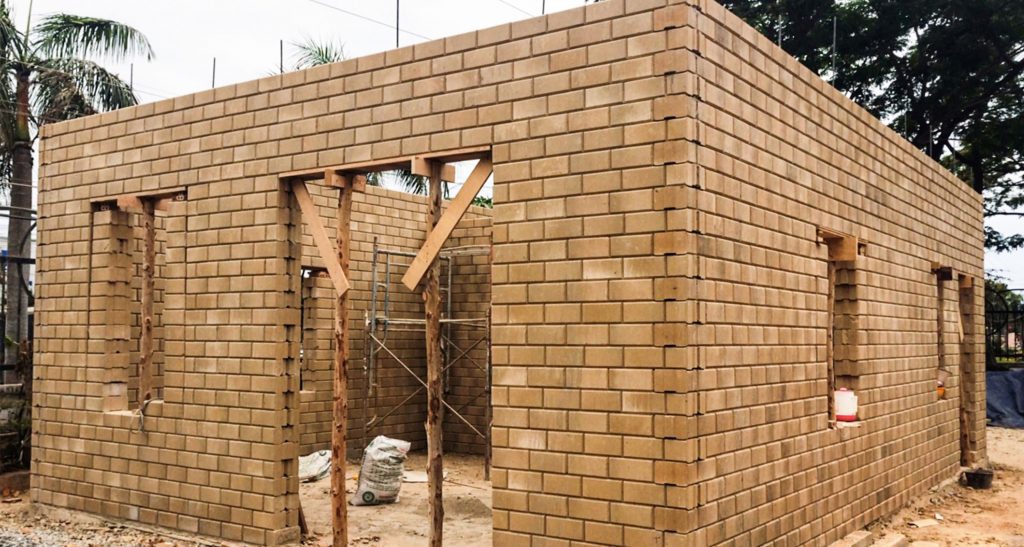
Consider using bricks
Traditional building materials cannot be left out as they a cheaper, long-lasting, and easier to maintain. This will help the cost reduce significantly
Buy materials personally
In some cases, some middlemen can take advantage and increase the costs of the materials. You can decide to source the materials personally and it can save you a lot.
Avoid building during the raining season
Rainy seasons may end up destroying or sweeping away materials. The workers also slow down when it rains as they take shelter thus you end up paying them with minimal progress.
Purpose to supervise the construction
This will help you measure progress and not assume that the workers will do what they are supposed to do. You can randomly supervise the work and materials in stock to ensure no theft is taking place.
You may skip expensive finishes for a moment
If you are running low on your budget, you can do some interior and exterior finishes such as tiling, landscaping, etc. later. This will save you some costs.
You may use recycled materials
Instead of having to buy new items, you may re-use items such as wood, timber, etc. for support during the construction and avoid buying new materials that will not be used upon completion of building the house.
Would you like to know some of the cheap houses you can build? They include tiny houses, container houses, ranch homes, prefabricated houses, etc. You can check our next blog on some cheaper houses you can build.
Buying or Building a House?
When discussing building a house, the question on is it better to build or buy a house always comes up. Before we handle the question, let first discuss several factors that will affect building or buying a house.
Tailoring
This is the ability to make your house suitable for your needs and dreams. It is also known as customizing. When you buy a house, it has already been made with a standard design suitable for everyone.
However, building your own home allows you to turn your dreams into reality. You are at liberty to tailor it to your specifications and preferences such as kitchen size, bedrooms, dining area, landscape, etc.
Technology
The world of technology keeps evolving and so are construction designs and fittings. A house that was constructed a year or two ago may not incorporate new technology or items such as CCTV, alarm systems, UPVC windows, solar lighting, etc.
This means that the buyer will have to install them or live without them. Building a house allows you to use such technologies from inception.
Freshness
The aspect of building your own house has some newness where you get to start afresh as the owner and use items for the first time. Whereas some houses are sold new, the feeling of building your own is incomparable.
You can do it in stages with ease
When you decide to build your house, you can do it in stages. For example, you can decide to purchase land as the first step then later build in phases.
Maintenance
Maintenance is slightly lower for a house you have built compared to purchasing a new one that you might try to fix some furnishing, fixtures, etc.
Time factor
Building a house takes time as compared to purchasing a ready-built one. When building you have to undergo the entire process which can be slightly tedious.
Location
Location is always a factor when it comes to homeownership. As such, finding a house in an area you wish to live is easier than trying to find land which may be expensive.
Budget factor
Where you are building or buying a house, you need to have a budget for that. An already built house has a price tag from the developer in comparison to the building where you can consider building a house cheaply.
From the above factors, each route you consider going has its own advantages and disadvantages. Therefore, you need to analyze your needs and settle on the most suitable one.
Bottom line
In general, building a house can be an exciting journey when planning is done well. This means you need to take time to plan before implementing. You can check out our next blog on quick tips you can use when building a house.